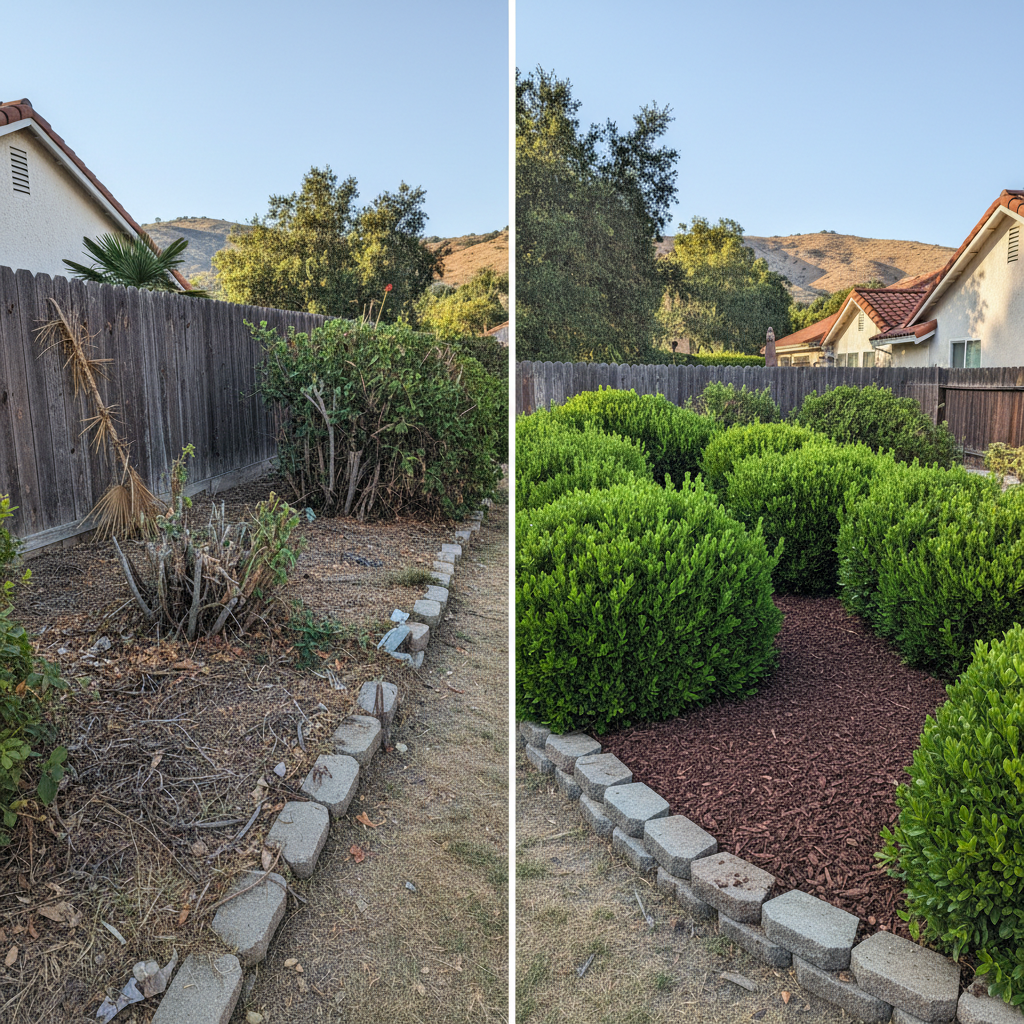
Alright, let's talk about those bushes and shrubs around your place. You've got a couple of main ways to keep 'em in line: you can shear 'em or you can selectively prune 'em. Both get the job done, but they do it differently, and the results? Totally different. I see folks all over Hawthorne, from the older homes near the airport to the newer builds up by the 405, making choices about this, and sometimes they don't even realize there's more than one option.
Shearing: The Quick & Uniform Look
Shearing is what most people picture when they think about trimming hedges. You get out the electric hedge trimmers, or maybe even a gas-powered one, and you just buzz the surface. It's fast, it's easy, and it gives you that really neat, formal, geometric look. Think perfect cubes, spheres, or straight lines.
Here's the deal with shearing:
Cost: Generally, it's cheaper. It takes less time, less skill, and less specialized equipment. If you hire someone, their hourly rate will be lower for this type of work because it's less labor-intensive per plant.
Durability & Health: This is where shearing starts to fall short. When you shear, you're mostly cutting the outer leaves and twigs. This encourages a dense layer of growth on the outside, which looks great for a bit. But what happens inside? The interior of the plant gets less light and air circulation. Over time, this can lead to dead spots, disease, and a weaker plant overall. You end up with a 'shell' of foliage and a hollow, woody interior. It also means you're not removing dead or crossing branches, which can rub and create entry points for pests.
Maintenance: You'll need to shear more often. That dense outer growth means new growth pops up quickly, ruining that neat shape. So, you're probably looking at trimming every few weeks during the growing season if you want to maintain that crisp look.
Appearance: Super formal, very tidy, and uniform. It's great for creating borders, privacy screens, or a very manicured garden aesthetic. If you're going for a precise, architectural look, shearing is your go-to.
Selective Pruning: The Natural & Healthy Approach
Selective pruning, sometimes called hand pruning or structural pruning, is a whole different ball game. Instead of just buzzing the surface, you're looking at each branch, deciding which ones to keep, which to remove, and where to make your cuts. You're trying to thin out the plant, encourage new growth from the inside, and maintain its natural shape.
With selective pruning, you're going to see:
Cost: It's usually more expensive. It takes more time, more skill, and often involves hand pruners, loppers, and sometimes even a small saw. The person doing the work needs to understand plant growth habits, not just operate a trimmer.
Durability & Health: This is where selective pruning shines. By removing dead, diseased, or crossing branches, you're improving the plant's overall health and structure. You're also allowing light and air to penetrate the interior, which reduces the risk of fungal issues and encourages strong, healthy growth throughout the plant, not just on the surface. This makes the plant more resilient, especially with our dry Hawthorne summers and occasional Santa Ana winds.
Maintenance: You won't need to prune as often. Because you're encouraging healthier, more balanced growth, the plant holds its shape longer. You might only need to prune once or twice a year, depending on the species.
Appearance: More natural, softer, and often more aesthetically pleasing in a less formal setting. It highlights the plant's inherent beauty and allows for better flowering and fruiting in many species. It's not about perfect lines; it's about a healthy, well-shaped plant.
My Recommendation for Hawthorne Homeowners
Look, I've seen a lot of yards in Hawthorne over the years. For most homeowners, especially with the kinds of shrubs we typically see around here – things like Pittosporum, Indian Hawthorn, or even some of the larger rose bushes – I'm going to lean heavily towards selective pruning.
Why? Because it's better for the plant in the long run. You get a healthier, more robust plant that's less prone to disease and looks good for longer without constant fussing. While the initial cost might be a bit higher, you'll likely save money on maintenance visits over the year because you won't need them as frequently. Plus, a healthier plant is a happier plant, and that adds to your home's curb appeal in a way that a constantly sheared, stressed shrub just can't.
Now, if you have a very specific, formal hedge that you absolutely want to keep looking like a perfect green wall, then shearing might be what you need. But even then, I'd recommend doing some selective thinning from the inside every so often to keep it from becoming a hollow shell.
If you're not sure which approach is best for your specific plants, or if you need a hand getting them into shape, give us a call at Hawthorne Tree Service. We can take a look and tell you what we think will work best for your yard and your budget. It's all about making sure your landscape thrives.